

NAS Oceana 2024 Air Show Performers & Statics
We will continue to update the website with additional incredible civilian and military performers. Stay tuned!
Last updated on Tuesday, April 23, 2024.
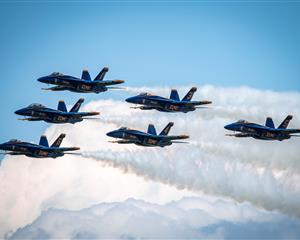
The U.S. Navy Blue Angels
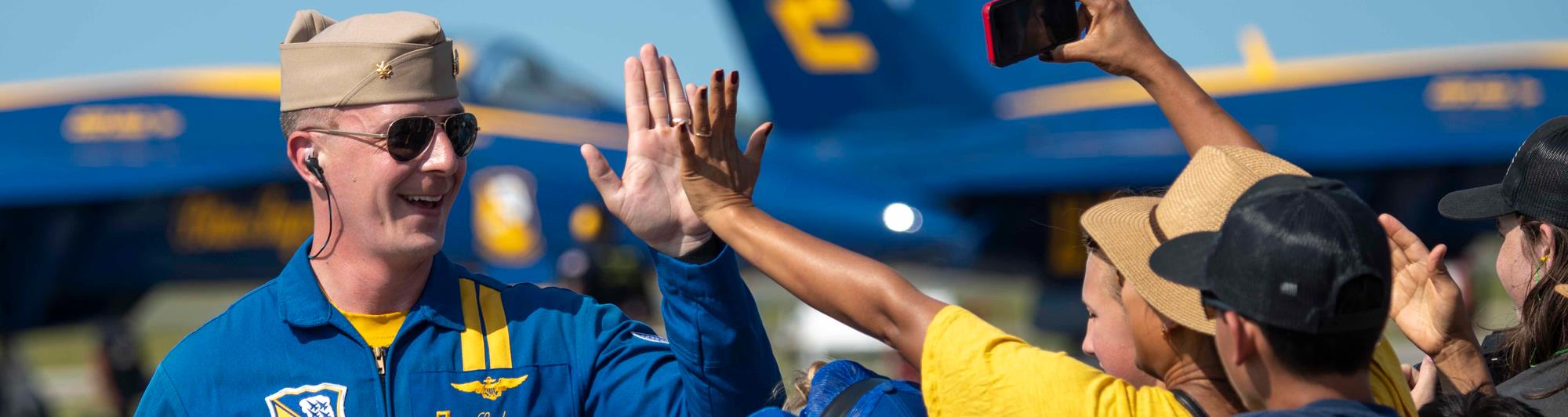
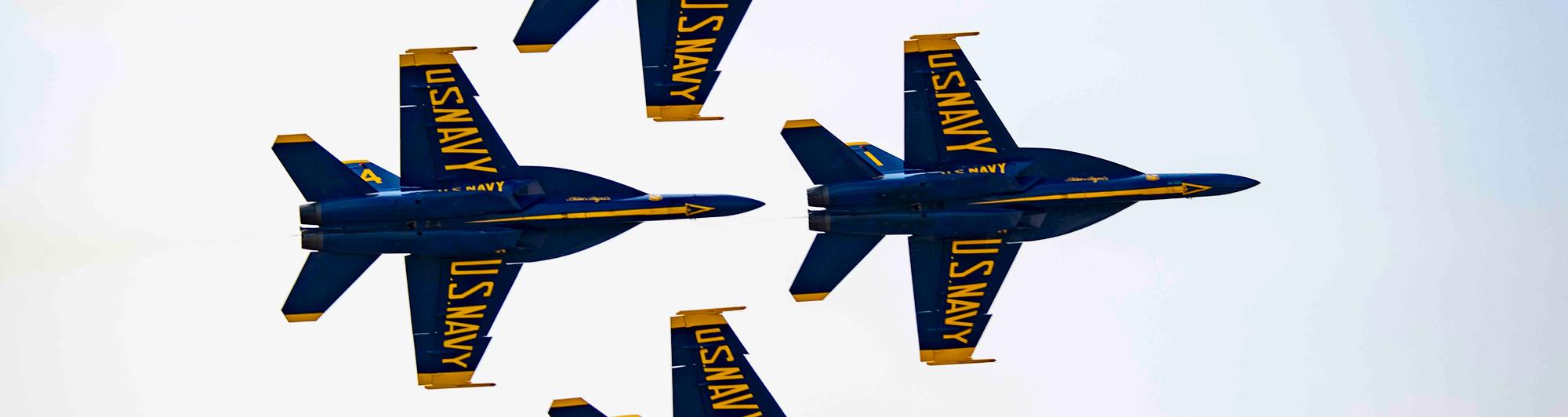
The Blue Angels will return to the 2024 NAS Oceana Air Show to showcase the teamwork and professionalism of the United States Navy and Marine Corps, while inspiring a culture of excellence and service to the community. A Blue Angels flight demonstration exhibits choreographed refinements of skills possessed by all naval aviators. It includes the graceful aerobatic maneuvers of the four-plane Diamond Formation, in concert with the fast-paced, high-performance maneuvers of its two Solo Pilots. Finally, the team illustrates the pinnacle of precision flying, performing maneuvers locked as a unit in the renowned, six-jet Delta Formation. It’s easy to see why their performances attract millions of spectators during air shows each year!www.blueangels.navy.mil
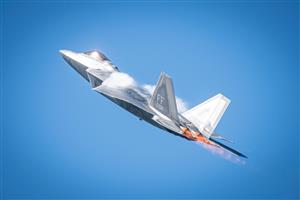
F-22 Raptor Demonstration Team
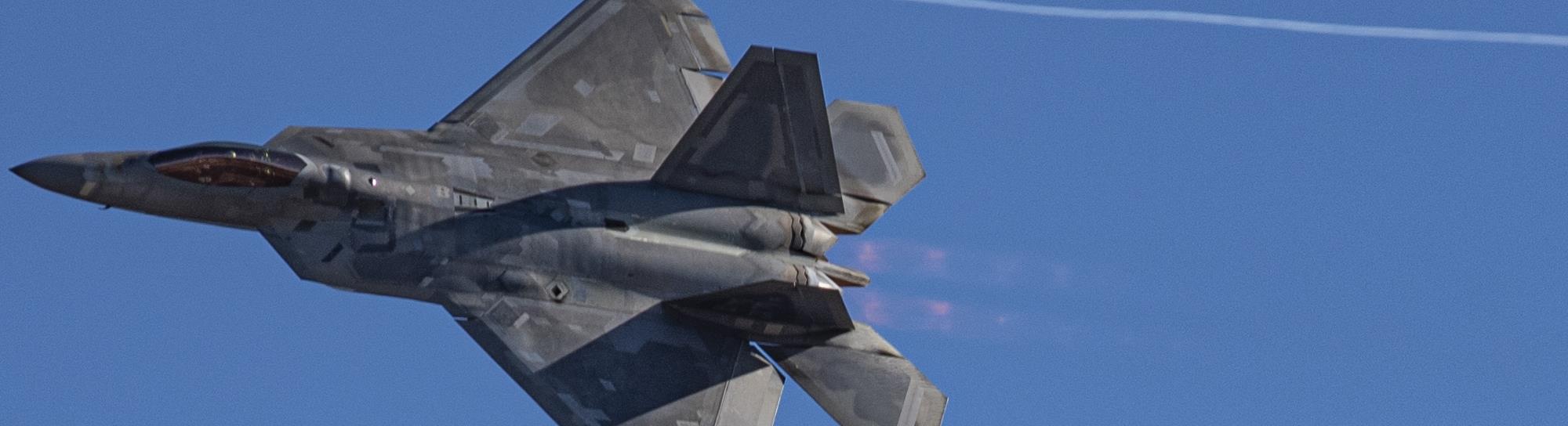
This year, we are thrilled to welcome back the F-22 Raptor Demonstration Team, stationed at Joint Base Langley-Eustis in Hampton, Virginia. Get ready to witness 43,340 pounds of advanced air superiority and supermaneuvrability of the F-22 Raptor, executing complex tactical maneuvers beyond the capabilities of any other fighter aircraft. You won’t want to miss this display of the most dominant fighter in the world!
https://www.jble.af.mil/About-Us/Units/Langley-AFB/F-22-Demo-Team/
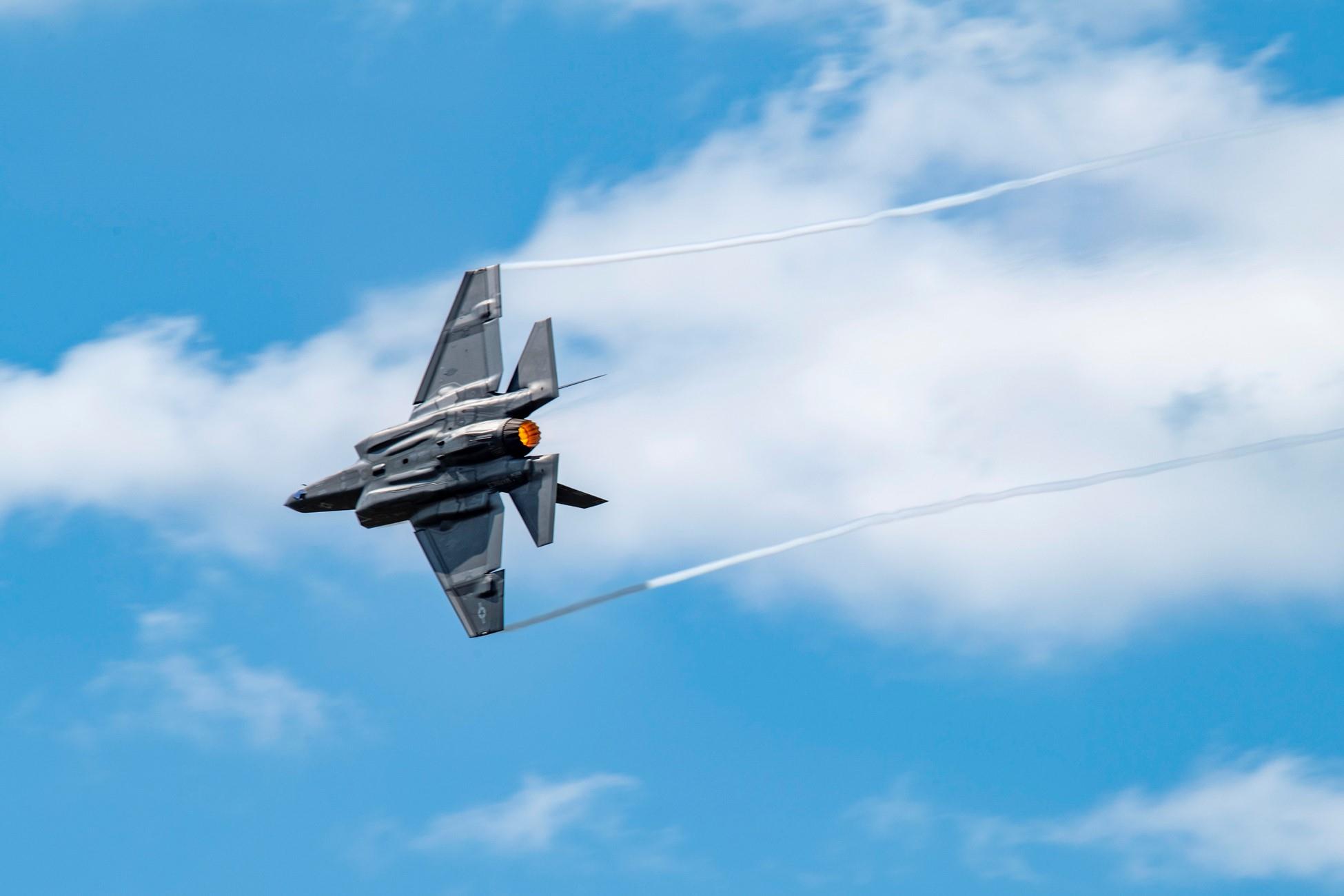
F-35C II Lightning Demonstration Team
We are proud to welcome the F-35C Lightning II Demonstration team back to the NAS Oceana Air Show this year to perform a variety of aerial maneuvers in the Navy's newest fighter and it's only 5th generation stealth aircraft. The pilots and aircraft from the VFA-125 “Rough Raiders,” stationed at NAS Lemoore, Calif., will provide just a glimpse of the incredible flying characteristics and power of this mighty machine, while showcasing the advanced training taught to every Navy and Marine Corps Aviator to fly the F-35C.
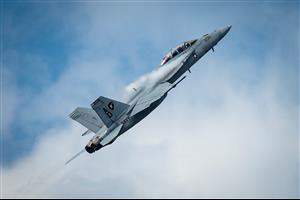
F/A-18F Rhino Demo Team
NAS Oceana’s very own Rhino Demo Team will be back to perform heart-stopping maneuvers in the Navy’s high performance, twin-engine, carrier-capable, multirole fighter aircraft, the F/A-18 Super Hornet. Hailing from VFA-106, the “Gladiators,” LT Sam “POPO” Vermilyea, LT Sam “Shy Ronnie” Magilke, LT Jake “Dancing Bear” Brouker, and LT Marty “Grouse” Wilson demonstrate the supreme capabilities of the mighty Super Hornet, which has earned a reputation as the backbone of the Navy’s carrier air wing and a workhorse within the fleet.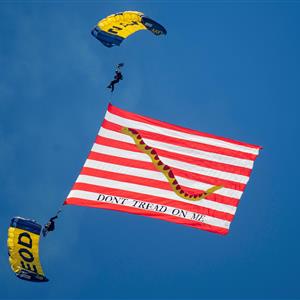
U.S. Navy Parachute Team, "The Leap Frogs"
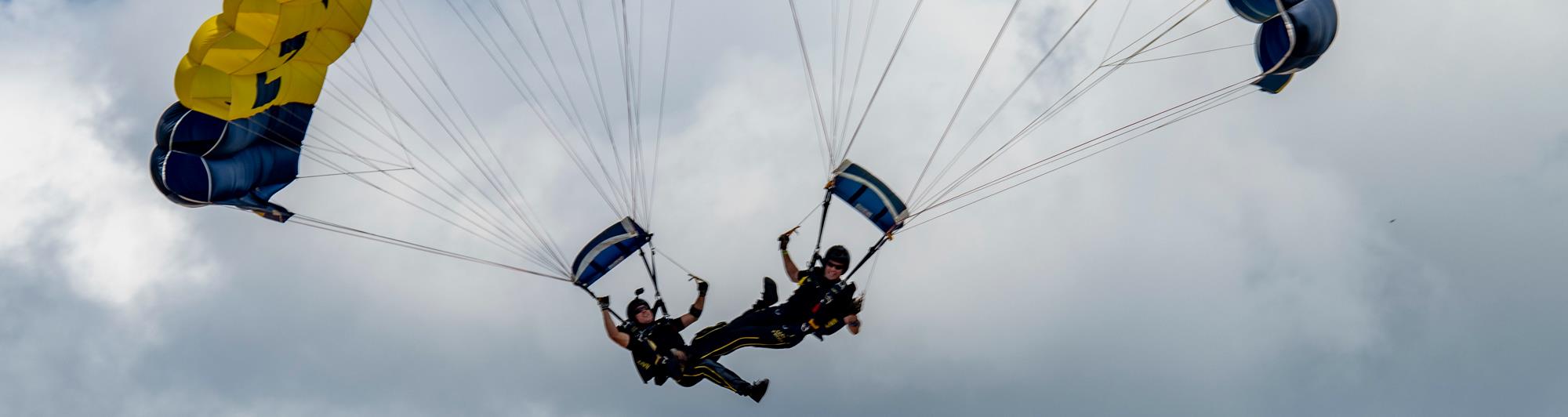
Navy Leap Frogs don’t make their daily commute in the driver’s seat - their day starts by jumping out of the back of an airplane at 12,000 feet. Since 1969, the Navy’s official skydiving and parachute team has performed gravity-defying demonstrations across the country in a show of the Navy’s exceptional skill. Every member of the team has joined this performance group after years of real-world special operations work. Comprised of active-duty Navy SEALs, Special Warfare Combatant-Craft Crewmen (SWCC), Divers (ND), Explosive Ordnance Disposal Technicians (EOD) and Aircrew Survival Equipmentmen (PR), the Leap Frogs demonstrate best-in-class training offered by Navy Special Warfare.
For the Leap Frogs, every day is an adventure. These Sailors live to serve their country as warriors and are trained to think fast in situations where there’s zero room for error. That’s what makes them a perfect parachute team. During their Leap Frog tour, team members will travel across the country performing daring stunts from over two miles above the ground. Leap Frogs serve for three years on the team before returning to their operational units.
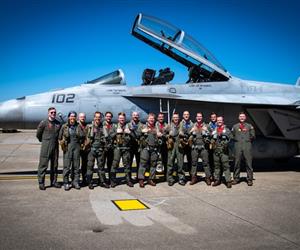
Air Power Demonstration
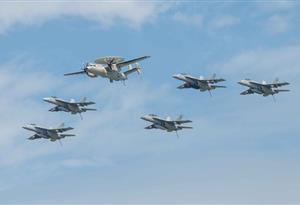
Make sure you have your cameras ready for this signature NAS Oceana Air Show performance! The sky will darken when this “aluminum overcast” passes over the crowd as locally based squadrons show their colors. The number and type of aircraft that participate is different every year, so you’ll just have to wait and see how loud the “sound of freedom” will be!
The Fleet Flyby
Make sure you have your cameras ready for this signature NAS Oceana Air Show performance! The sky will darken when this “aluminum overcast” passes over the crowd as locally based squadrons show their colors. The number and type of aircraft that participate is different every year, so you’ll just have to wait and see how loud the “sound of freedom” will be!
CF-18 Demonstration Team
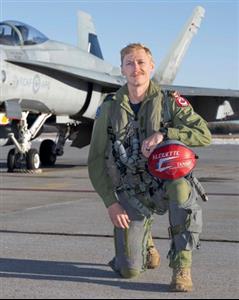
We're thrilled to welcome the Royal Canadian Air Force CF-18 Demonstration Team this year to the NAS Oceana Air Show!
The year 2024 marks 100 years of service for the RCAF as a distinct military element. The CF-18 Demo Team is proud to represent Canada and the RCAF throughout the 2024 demonstration season in celebration of the RCAF’s Centennial.
Throughout the 2024 Centennial season a specially painted CF-18 Hornet, featuring a unique commemorative paint job, will wow audiences at 18 locations across Canada and one in the United Kingdom as part of Operation INSPIRATION 2024.
https://www.canada.ca/en/air-force/services/showcasing/cf-18-demonstration-team.html
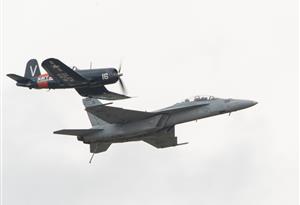
Navy Legacy Flight
The Navy Legacy Flight Foundation program matches today's frontline military fighters with their predecessors in close flight maneuvers at air shows nationwide. USN F/A-18F "Rhino" fighters, F/A-18G "Growler" Electronic Countermeasure aircraft, and F-35C Lightning II fly on the wings of World War II, Korean and Vietnam era fighters in an amazing tribute to Naval Aviators both past and present.
The U.S. Navy's TACDEMO teams from VFA-106 and VFA-122 are the U.S. Navy's Legacy Flight teammates. These talented active duty aviators fly the dynamic Super Hornet tactical demonstrations that precede our Navy Legacy flights. Strike Fighter Squadron 122 (VFA-122), also known as the "Flying Eagles", are the west coast team and Strike Fighter Squadron 106 (VFA-106), also known as the "Gladiators", are the east coast team.
Starting in 2022, all types of the U.S. Navy training aircraft will also be doing static demonstrations at airshows and performing Legacy Flights with the fighters and legacy warbird aircraft. The Navy approves a select group of civilian pilots to fly their warbirds in formation with the TACDEMO and F-35C aircraft. Intensive training and preparation are the focus of a week-long mission each spring to prepare the pilots for safe and enjoyable demonstrations all over the U.S.
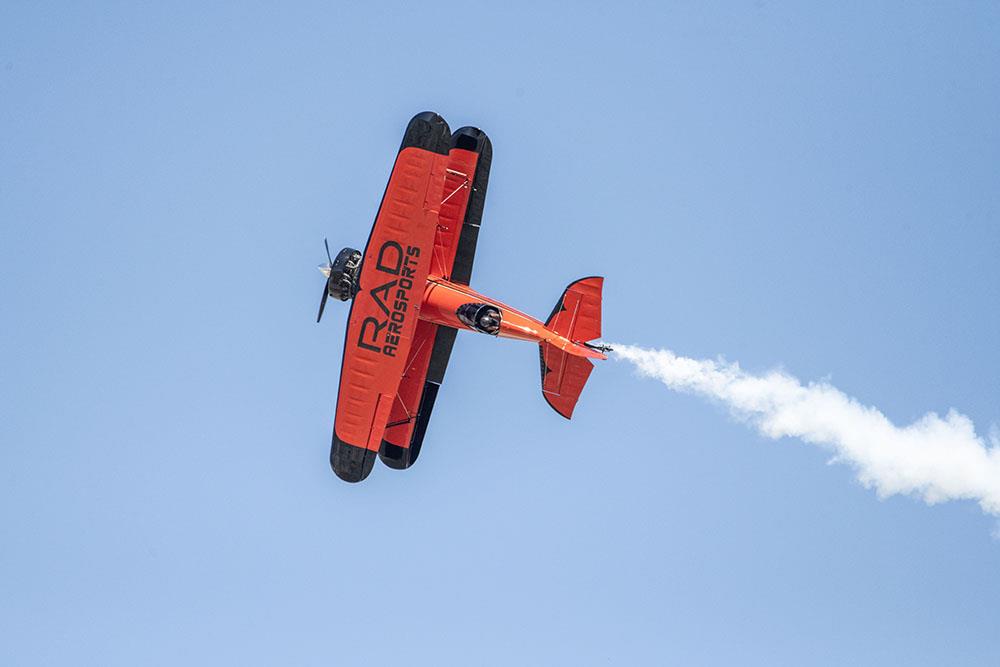
Jarrod Lindemann of Rad Aerosports
Jarrod Lindemann knew he would become a part of airshow history after seeing his first airshow and doing his first aerobatic performance. To date, Jarrod has logged thousands of hours in everything from training aircraft to private jets.
In 2020, Jarrod acquired the Jet Waco, a Taperwing Waco modified with the addition of a Learjet engine. Snap rolls, spins, barrel rolls, and hovers are a few of the tricks this aircraft is capable of, in addition to reaching speeds of up to 250 mph. The aircraft can even accelerate while climbing straight up, because its thrust-to-weight ratio is greater than 1:1! With the Jet-Waco, Jarrod has realized a lifetime ambition of his to serve as an inspiration to young aviators everywhere.
The mission of Team RAD is to inspire and excite individuals of all ages to take up flying.
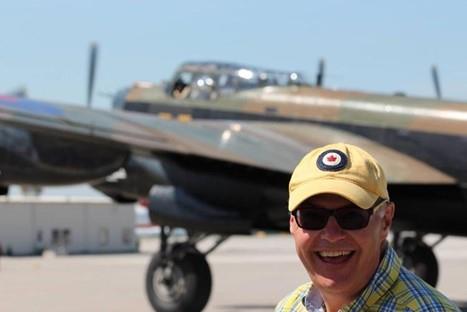
Air Show Announcer Ric Peterson
We are pleased to welcome Ric Peterson this year as our air show announcer! He is also an award winning broadcast journalist, and has been a voice over talent, and radio and TV host for over 30 years. You may know Ric as the voice of Fleet Week San Francisco, the Los Angeles County Air Show, The Canadian National International Air Show in Toronto, Friendship Day MCAS Iwakuni Japan, and the Sanicole Airshow in Belgium. Additionally, Ric is an Honorary Member of the Snowbirds Jet Demonstration team.
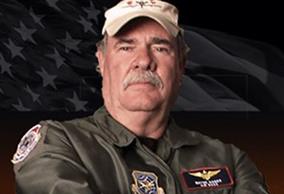
Air Boss - Wayne Boggs
The man, the myth, the legend RETURNS! We’re thrilled to welcome back our civilian Air Boss, Wayne Boggs, to the flight line this year.
As president and owner of Air Boss and Consulting International Inc, Wayne G Boggs is recognized as one of the top Air Bosses in the country. For over 25 years he has assisted in the production and execution of an average of 18-25 air shows each year. Wayne served his country for 10 years in the United States Marine Corps, in addition to 30 years working for the FAA.